When Parents Visit for Six Months: The NRI Guide to Health Insurance for Visiting Parents

When Parents Visit for Six Months: The NRI Guide to Health Insurance for Visiting Parents
For many NRI families, it's the highlight of the year. Amma and Appa, or Mummy and Papa, arrive with suitcases full of pickles and stay for months, cooking, babysitting and filling the house with noise. But behind the joy sits a worry every host knows well: what happens if they get sick here?
The US has some of the highest medical costs in the world, and visiting parents aren't eligible for Medicare or the insurance plans most residents use. A single emergency room visit or hospital stay can cost thousands of dollars. That's why visitor medical insurance, a short-term travel health policy, is one of the most important purchases you'll make for their trip.
This article is general information, not insurance or medical advice. Always read the plan documents before you buy.
Fixed vs. Comprehensive: The Choice that Matters Most
Almost every visitor insurance plan falls into one of two types.
Fixed-benefit Plans pay a set amount for each type of treatment, such as a fixed sum per ER visit or per hospital day, no matter what the hospital actually charges. They're cheaper, but if the bill is larger than the fixed amount, your family pays the difference.
Comprehensive Plans work more like regular insurance. After a deductible, the plan pays a percentage of actual covered costs, up to the policy maximum. They cost more, but they protect you against the large, unexpected bill, which is the real reason to buy insurance in the first place. That's why many insurance advisors recommend comprehensive plans for parents over 60, or for any stay longer than about a month.
The Truth About Pre-existing Conditions
This is where most families get caught out. Most short-term visitor plans cover only new, unexpected illnesses or injuries that begin after the policy starts. Routine care for existing conditions such as diabetes or high blood pressure, along with checkups, dental and vision, generally isn't covered.
Many plans do offer something called acute onset of pre-existing conditions coverage. An acute onset is a sudden, unexpected flare-up of an existing condition that needs urgent treatment and comes without warning. A sudden heart episode in a parent with a known heart condition might qualify. A planned refill of blood-pressure medication would not. The attending doctor usually decides whether a situation counts.
Two things to check carefully:
- Age limits: Acute onset benefits often shrink with age. Some plans cover up to the full policy maximum for travelers under 70, but offer much lower limits, often in the range of $15,000 to $30,000, for those aged 70 to 79. Some don't offer it at all above 70.
- Cardiac caps: Some plans set a separate, lower limit for heart attacks and strokes, the very conditions many families worry about most.
What Will it Cost?
Prices depend on age, plan type, deductible and coverage amount. As a broad guide, expect roughly $2 to $10 per person per day. Fixed plans sit at the low end, and comprehensive coverage for parents over 70 at the high end. One broker's 2026 quotes put fixed plans at about $30 to $166 per month and comprehensive plans at about $117 to $561 per month.
A buyer's Checklist
- Buy before they leave India. Some comprehensive plans can start the day they depart.
- Choose a policy maximum that matches their age and health. Older parents need more coverage, not less.
- Compare deductibles. Check whether the deductible applies once per trip or once per illness.
- Look for a PPO network. In-network hospitals and doctors usually charge lower rates and may bill the insurer directly.
- Read the exclusions, including chronic and mental health conditions.
- Cover the full stay. If they extend their visit, extend the policy before it expires.
If There's a Medical Emergency
- Call 911 for anything life-threatening. Don't delay care to check coverage.
- Carry the insurance card and policy number at all times, along with a list of medications and conditions.
- Notify the insurer as soon as possible. Many plans have a 24-hour assistance line.
- Use urgent care for non-emergencies. It's usually much cheaper than an ER.
- Keep every bill and report. You'll need them to file a claim.
With the right policy in place, you can focus on what matters: the long chai conversations and the extra hands in the kitchen.
Looking for a licensed agent who specializes in visitor insurance? Compare insurance advisors on Sulekha - https://us.sulekha.com/insurance-serviceThe emergency steps above are general guidance and are not drawn from a specific source.
Sources
- Visitor insurance for parents visiting the US: what green card and H-1B families should know (US Immigration Data)
- Which is the best policy for parents with pre-existing conditions? (VisitorsCoverage)
- Best travel insurance for parents visiting USA (NerdWallet)
- Best visitors insurance plans with pre-existing condition coverage (Immihelp)
- Fixed vs. comprehensive visitors insurance (Insubuy)
- Step-by-step guide to visitor insurance for Indian parents (VisitorGuard)
- Best travel insurance for parents visiting USA in 2026: cost ranges (American Visitor Insurance)
- A guide to visitor insurance for parents visiting the USA (Pacific Prime)
The emergency steps above are general guidance and are not drawn from a specific source.
Take the next step toward your goals
Share your requirement and find the best care providers in your area
-
Looking for a caretaker’s job? Build your profile and get in touch with families in your vicinity.
-
Discover nannies, babysitters, cooks, housekeepers, pet sitters, and elder care under one roof.
-
Get all the support you need to run a successful care center.
-
Search for appropriate centers near you depending on your needs.
Care Corner Insights: Blog Library

Two Weeks of Winter Break: Childcare Options Beyond Daycare
Two Weeks of Winter Break: Childcare Options Beyond Daycare Schools close for about two weeks over Christmas and New Year, but most offices don't. Here's a practical guide to covering the gap — from winter camps and employer benefits to nanny shares

When Parents Visit for Six Months: The NRI Guide to Health Insurance for Visiting Parents
When Parents Visit for Six Months: The NRI Guide to Health Insurance for Visiting Parents. For many NRI families, it's the highlight of the year. Amma and Appa, or Mummy and Papa, arrive with suitcases full of pickles and stay for months

Balancing School Pickup, Homework, and Weekend Temple or Cultural Classes: A Schedule Guide for NRI Parents
NRI parents juggling school, homework, and cultural classes? This practical scheduling guide with templates helps you balance academics, heritage, and family time with support from nannies, babysitters, and tutors.

After-School Care Costs in Edison, the Bay Area, Dallas, and Chicago: What NRI Families Are Paying in 2027
After-school care is more than just a service—it’s an investment in your child’s happiness and your peace of mind. Whether you’re in Edison, the Bay Area, Dallas, or Chicago, knowing the local costs and options can help you make the best choice for y

5 Questions to Ask Before Hiring an After-School Nanny or Babysitter in the US
Hiring an after-school nanny or babysitter? Ask these 5 critical questions about background checks, work authorization, references, and more to ensure your child’s safety and peace of mind.
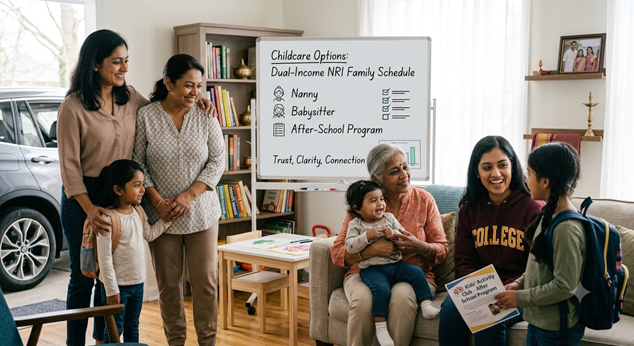
Nanny, Babysitter, or After-School Program: What Works Best for Dual-Income NRI Families
The Childcare Dilemma: Finding the Perfect Fit For dual-income NRI families

Who Picks Up Your Kids After School? After-School Care Options for Indian-American Working Parents
The Juggle Is Real (But So Are the Solutions!)

Classroom Organization Tips for Childcare Providers
A well-organized classroom can make a big difference in a childcare setting. When toys, learning materials, books, and supplies have designated places, children know what to expect and childcare providers can spend less time searching for things and

How to Improve Parent Communication: A Caregiver’s Guide to Trust, Clarity, and Connection
Parent communication isn’t just about updates—it’s about building trust, easing worries, and creating a partnership that feels like family. For caregivers, mastering this skill can turn a good experience into an unforgettable one. Here’s how to make
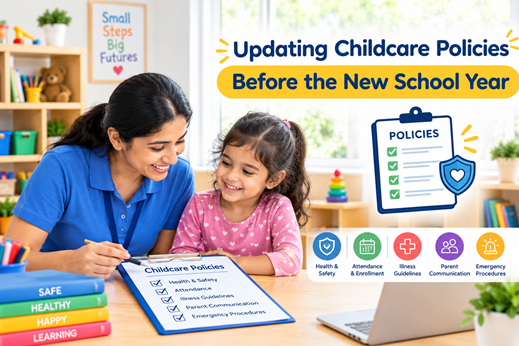
Updating Childcare Policies Before the New School Year
As summer winds down and the new school year approaches, families across the US and Canada begin preparing for a season of change. For parents who rely on childcare providers — whether nannies, babysitters, or daycare centers — this is also the perfe