Reducing First-Day School Anxiety: A Parent’s Guide to a Smooth Transition

The first day of school is a milestone—for both kids and parents! But let’s be honest: it can also be a whirlwind of emotions. Excitement, curiosity, and yes, a fair share of anxiety. Whether your little one is starting kindergarten or your teen is stepping into a new school, those first-day jitters are real. The good news? With a little preparation and a lot of love, you can turn those nerves into confidence and excitement.
At Sulekha Care Services, we understand the challenges parents face, and we’re here to help you navigate this big day with ease. Here’s your ultimate guide to reducing first-day school anxiety and setting your child up for success.
Why Does First-Day Anxiety Happen?
First-day jitters are completely normal. For kids, school represents a new environment, unfamiliar faces, and a break from the comfort of home. For parents, it’s about letting go and trusting that their child will thrive. Common triggers include:
- Fear of the Unknown: Will I like my teacher? Will I make friends?
- Separation Anxiety: Will Mom/Dad be okay without me?
- Academic Pressure: Will I be able to keep up?
- Social Concerns: What if no one likes me?
The key is to acknowledge these feelings and address them proactively.
Preparing for the Big Day: Tips for Parents
1. Start the Conversation Early
Talk about school weeks before the first day. Use positive language to build excitement:
- “You’re going to meet so many new friends!”
- “Your teacher is going to love having you in class!”
- “You’ll learn so many cool things!”
For older kids, discuss what to expect—class schedules, extracurriculars, and fun school traditions.
2. Visit the School Ahead of Time
If possible, tour the school with your child. Walk the halls, peek into the classroom, and even meet the teacher. Familiarity reduces fear and helps your child feel more comfortable.
3. Practice the Routine
A few days before school starts, simulate the morning routine:
- Wake up at the same time
- Pack their backpack together
- Practice the drop-off/pick-up process
This helps your child adjust to the new schedule and feel more in control.
4. Pack a Comfort Item
For younger kids, a small comfort item—like a family photo, a favorite keychain, or a special note in their lunchbox—can provide reassurance throughout the day.
5. Role-Play Social Scenarios
Practice simple interactions your child might have at school:
- “Hi, I’m \[Name\]. Want to play at recess?”
- “Can I sit with you at lunch?”
This builds confidence in social situations.
Morning Of: Keeping Calm and Confident
1. Stay Positive (Even If You’re Nervous Too!)
Kids pick up on parental emotions. If you’re anxious, they’ll be anxious. Smile, stay upbeat, and exude confidence—even if you’re a wreck inside!
2. Give Them a Pep Talk
Remind them of their strengths and past successes:
- “Remember how brave you were at summer camp? You’ve got this!”
- “You’re so good at making friends—I bet you’ll have a new bestie by lunch!”
3. Keep Goodbyes Short and Sweet
Lingering at the drop-off can increase anxiety. If your child is tearful, trust that the teacher will comfort them once you leave.
4. Avoid Sneaking Out
It might seem easier, but sneaking out can make kids feel abandoned. Always say goodbye—even if it’s tough.
After School: Reinforce the Positive
1. Ask Open-Ended Questions
Instead of “How was your day?” (which often gets a “Fine”), try:
- “What was the best part of your day?”
- “Did you learn anything new today?”
- “Who did you sit with at lunch?”
2. Celebrate Small Wins
Praise their bravery and any little victories:
- “I’m so proud of you for trying something new!”
- “You made a friend already? That’s amazing!”
3. Address Concerns Gently
If your child had a rough day, listen without judgment. Reassure them that it’s okay to feel nervous and that tomorrow will be better.
When to Seek Extra Support
For most kids, first-day anxiety fades within a few weeks. But if your child is still struggling—refusing to go to school, complaining of physical symptoms (headaches, stomachaches), or showing signs of depression—it may be time to seek help.
- Talk to the Teacher: They can provide insights and extra support.
- School Counselor: Many schools have counselors who specialize in helping kids adjust.
- Professional Help: If anxiety persists, a child therapist can offer coping strategies.
Final Thoughts: You’ve Got This!
The first day of school is a big deal, but remember: you’re not alone. Every parent and child goes through this, and with patience, preparation, and positivity, your little one will thrive.
Need more tips or support? Explore Sulekha Care Services for a network of trusted professionals ready to help your family shine.
At Sulekha Care Services, we’re here to support you every step of the way. Whether you need childcare tips, tutoring resources, or just a listening ear, we’ve got your back.
Here’s to a fantastic school year filled with learning, laughter, and new friendships!
Take the next step toward your goals
Share your requirement and find the best care providers in your area
-
Looking for a caretaker’s job? Build your profile and get in touch with families in your vicinity.
-
Discover nannies, babysitters, cooks, housekeepers, pet sitters, and elder care under one roof.
-
Get all the support you need to run a successful care center.
-
Search for appropriate centers near you depending on your needs.
Care Corner Insights: Blog Library

How to Find a Trusted, Culturally Matched Part-Time Babysitter Near You
Your child's first babysitter shouldn't just be trustworthy — they should feel like family. Here's a step-by-step walkthrough for finding (and vetting) a part-time babysitter who speaks your language, understands your food rules, and celebrates your

Part-Time Babysitter vs. Full-Time Nanny: What US-Based NRI Families Should Consider
NRI family in the US deciding between a part-time babysitter and a full-time nanny? Compare costs, responsibilities, schedules, and fit to find the right childcare solution for your family. If you're an NRI parent in the US, you've probably found yo

Nanny-Share vs. After-School Program: Splitting Costs with Another Indian Family in Your Neighborhood
Raising kids in a new country is expensive — but it doesn't have to be done alone. Here's how two neighborhood families can share childcare costs, Indian-style. Why Indian Families Are Rethinking Childcare If you're an Indian parent in the US, or C

Two Weeks of Winter Break: Childcare Options Beyond Daycare
Two Weeks of Winter Break: Childcare Options Beyond Daycare Schools close for about two weeks over Christmas and New Year, but most offices don't. Here's a practical guide to covering the gap — from winter camps and employer benefits to nanny shares

When Parents Visit for Six Months: The NRI Guide to Health Insurance for Visiting Parents
When Parents Visit for Six Months: The NRI Guide to Health Insurance for Visiting Parents. For many NRI families, it's the highlight of the year. Amma and Appa, or Mummy and Papa, arrive with suitcases full of pickles and stay for months

Balancing School Pickup, Homework, and Weekend Temple or Cultural Classes: A Schedule Guide for NRI Parents
NRI parents juggling school, homework, and cultural classes? This practical scheduling guide with templates helps you balance academics, heritage, and family time with support from nannies, babysitters, and tutors.

After-School Care Costs in Edison, the Bay Area, Dallas, and Chicago: What NRI Families Are Paying in 2027
After-school care is more than just a service—it’s an investment in your child’s happiness and your peace of mind. Whether you’re in Edison, the Bay Area, Dallas, or Chicago, knowing the local costs and options can help you make the best choice for y

5 Questions to Ask Before Hiring an After-School Nanny or Babysitter in the US
Hiring an after-school nanny or babysitter? Ask these 5 critical questions about background checks, work authorization, references, and more to ensure your child’s safety and peace of mind.
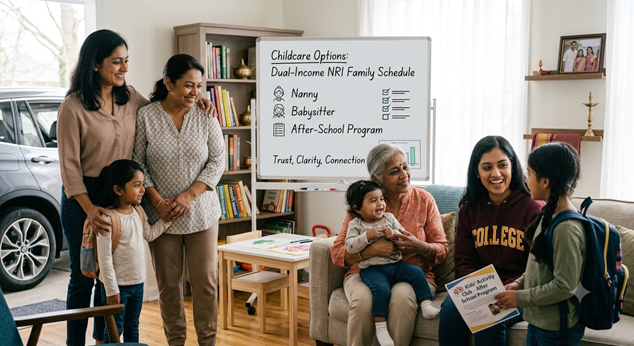
Nanny, Babysitter, or After-School Program: What Works Best for Dual-Income NRI Families
The Childcare Dilemma: Finding the Perfect Fit For dual-income NRI families

Who Picks Up Your Kids After School? After-School Care Options for Indian-American Working Parents
The Juggle Is Real (But So Are the Solutions!)