Nanny, Babysitter, or After-School Program: What Works Best for Dual-Income NRI Families

The Childcare Dilemma: Finding the Perfect Fit
For dual-income NRI families, balancing career ambitions and parenting duties can feel like walking a tightrope. The question of "Who will care for my child after school?" is one that weighs heavily on every parent’s mind. With so many options—nannies, babysitters, day care centers, and family child care centers—how do you choose what’s best for your family? Let’s break it down, Darling, so you can make the right decision with confidence!
The Ultimate Comparison Guide
1. Nannies: The Personalized Touch
What it is: A dedicated, in-home caregiver who provides one-on-one attention to your child.
Pros:
- Personalized care: Tailored to your child’s needs, routine, and personality.
- Flexibility: Can adapt to your schedule, including early mornings, late evenings, or overnight care.
- Cultural alignment: Many nannies in the NRI community understand cultural values, languages, and traditions, making them a great fit for families who want to preserve their heritage.
- Comfort of home: Your child stays in a familiar environment, which can be less stressful for both of you.
Cons:
- Cost: Nannies are typically the most expensive option, especially if you hire full-time or live-in.
- Vetting process: Requires thorough background checks, interviews, and trial periods to ensure the right fit.
Best for: Families who prioritize personalized care, flexibility, and cultural continuity and are willing to invest in a high-quality, long-term solution.
2. Babysitters: The Flexible Friend
What it is: A part-time caregiver who looks after your child for shorter periods, such as after-school hours or evenings.
Pros:
- Affordability: More budget-friendly than a nanny, making it a great option for families who need occasional or short-term care.
- Flexibility: Ideal for parents with unpredictable schedules or those who only need help a few times a week.
- Cultural fit: Many babysitters in the NRI community are familiar with cultural nuances, from helping with homework in Hindi to preparing familiar snacks.
Cons:
- Less consistency: Babysitters may have other commitments, so scheduling in advance is key.
- Limited availability: May not be suitable for full-time or long-term care.
Best for: Families who need occasional, flexible care and want a more affordable option without sacrificing quality or cultural alignment.
3. Day Care Centers: The Structured Solution
What it is: A licensed facility where children are supervised in a group setting with structured activities, homework help, and socialization.
Pros:
- Socialization: Kids get to interact with peers, which is great for their development.
- Structured environment: Many centers offer homework help, extracurricular activities, and even cultural programs (like Bollywood dance or Hindi classes).
- Reliability: Centers often have set hours and backup staff, so you don’t have to worry about last-minute cancellations.
- Regulated and safe: Licensed centers follow strict safety and quality standards.
Cons:
- Less personalized: Your child won’t get one-on-one attention, but the group setting can be a pro for social skills.
- Rigid schedule: May not accommodate unpredictable work hours or last-minute changes.
Best for: Families who value structure, socialization, and reliability and have predictable work schedules.
4. Family Child Care Centers: The Home Away from Home
What it is: A small-scale, home-based childcare option where a licensed provider cares for a small group of children in their own home.
Pros:
- Home-like environment: Feels cozier and more personal than a traditional day care center.
- Smaller group sizes: More individual attention for your child.
- Flexibility: Often more willing to accommodate unique schedules or needs.
- Cultural connection: Many family child care providers in the NRI community create a warm, culturally familiar environment.
Cons:
- Limited availability: May have fewer spots than larger day care centers.
- Less structured: May not offer as many extracurricular activities as a traditional day care.
Best for: Families who want a home-like, nurturing environment with more personalized care but still value some structure.
Sulekha Care Services: Your Trusted Partner
At Sulekha Care Services, we understand the unique challenges faced by dual-income NRI families. That’s why we connect you with vetted, trusted caregivers—whether you’re looking for a nanny, babysitter, day care center, or family child care provider. Our platform makes it easy to:
- Browse profiles of experienced, culturally aligned caregivers.
- Read reviews from other NRI families in your area.
- Book a trial to ensure the perfect fit for your family.
Take the next step toward your goals
Share your requirement and find the best care providers in your area
-
Looking for a caretaker’s job? Build your profile and get in touch with families in your vicinity.
-
Discover nannies, babysitters, cooks, housekeepers, pet sitters, and elder care under one roof.
-
Get all the support you need to run a successful care center.
-
Search for appropriate centers near you depending on your needs.
Care Corner Insights: Blog Library

Two Weeks of Winter Break: Childcare Options Beyond Daycare
Two Weeks of Winter Break: Childcare Options Beyond Daycare Schools close for about two weeks over Christmas and New Year, but most offices don't. Here's a practical guide to covering the gap — from winter camps and employer benefits to nanny shares

When Parents Visit for Six Months: The NRI Guide to Health Insurance for Visiting Parents
When Parents Visit for Six Months: The NRI Guide to Health Insurance for Visiting Parents. For many NRI families, it's the highlight of the year. Amma and Appa, or Mummy and Papa, arrive with suitcases full of pickles and stay for months

Balancing School Pickup, Homework, and Weekend Temple or Cultural Classes: A Schedule Guide for NRI Parents
NRI parents juggling school, homework, and cultural classes? This practical scheduling guide with templates helps you balance academics, heritage, and family time with support from nannies, babysitters, and tutors.

After-School Care Costs in Edison, the Bay Area, Dallas, and Chicago: What NRI Families Are Paying in 2027
After-school care is more than just a service—it’s an investment in your child’s happiness and your peace of mind. Whether you’re in Edison, the Bay Area, Dallas, or Chicago, knowing the local costs and options can help you make the best choice for y

5 Questions to Ask Before Hiring an After-School Nanny or Babysitter in the US
Hiring an after-school nanny or babysitter? Ask these 5 critical questions about background checks, work authorization, references, and more to ensure your child’s safety and peace of mind.
Nanny, Babysitter, or After-School Program: What Works Best for Dual-Income NRI Families
The Childcare Dilemma: Finding the Perfect Fit For dual-income NRI families

Who Picks Up Your Kids After School? After-School Care Options for Indian-American Working Parents
The Juggle Is Real (But So Are the Solutions!)

Classroom Organization Tips for Childcare Providers
A well-organized classroom can make a big difference in a childcare setting. When toys, learning materials, books, and supplies have designated places, children know what to expect and childcare providers can spend less time searching for things and

How to Improve Parent Communication: A Caregiver’s Guide to Trust, Clarity, and Connection
Parent communication isn’t just about updates—it’s about building trust, easing worries, and creating a partnership that feels like family. For caregivers, mastering this skill can turn a good experience into an unforgettable one. Here’s how to make
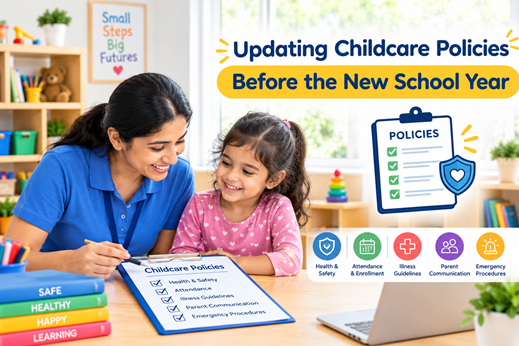
Updating Childcare Policies Before the New School Year
As summer winds down and the new school year approaches, families across the US and Canada begin preparing for a season of change. For parents who rely on childcare providers — whether nannies, babysitters, or daycare centers — this is also the perfe