Balancing School Pickup, Homework, and Weekend Temple or Cultural Classes: A Schedule Guide for NRI Parents

NRI parents juggling school, homework, and cultural classes? This practical scheduling guide with templates helps you balance academics, heritage, and family time with support from nannies, babysitters, and tutors.
If you're an NRI parent in the US, you know the balancing act all too well. Between school pickup at 3 PM, homework battles at 5 PM, weekend temple classes or Bharatanatyam lessons, and somehow still finding time for family dinners—you're basically a professional juggler.
But here's the truth: You don't have to do it alone. With the right schedule, clear priorities, and support from trusted caregivers (nannies, babysitters, tutors), you can create a routine that honors both your child's academic success and their cultural heritage—without burning out in the process.
This guide walks you through practical scheduling strategies, sample weekly templates, and tips for involving caregivers so your family can thrive in both worlds.
Why This Balancing Act Matters
For NRI families, raising kids in the US isn't just about academics and extracurriculars—it's about maintaining a connection to heritage. Whether it's weekend Hindi classes, temple Bal Vihar, Indian dance lessons, or music practice, these activities help children:
- Stay connected to their roots through language, stories, and traditions
- Build community with other Indian-American kids who "get" the duality
- Develop discipline through regular practice and cultural immersion
- Celebrate festivals with understanding and pride, not just obligation
But fitting all this into a busy American school schedule? That's where the challenge kicks in.
Step 1: Map Out Your Non-Negotiables
Before you can build a schedule, you need to know what's fixed. Grab a calendar (digital or paper) and mark down:
School & Academic Commitments:
- School hours (typically 8 AM–3 PM)
- After-school activities (sports, clubs, tutoring)
- Homework time (aim for 1–2 hours on weekdays)
- Test prep or special projects
Cultural & Heritage Activities:
- Weekend temple classes (Bal Vihar, Sunday School)
- Language classes (Hindi, Tamil, Telugu, Gujarati)
- Dance or music lessons (Bharatanatyam, Carnatic, etc.)
- Festival preparations and community events
Family Time:
- Weeknight dinners (even if just 30 minutes together)
- Weekend family activities (temple visits, outings, relaxation)
- One-on-one time with each child
Work & Personal Time:
- Your work hours (and any flexibility)
- Self-care (yes, this is non-negotiable too!)
Once you've mapped these out, you'll see where the gaps are—and where you might need help.
Step 2: Build Your Weekly Schedule Template
Here's a sample weekly schedule for an NRI family with two school-age kids, working parents, and weekend cultural classes. Adjust based on your family's needs!
Monday–Friday (School Days)
Time | Activity | Who's Responsible |
6:30–7:30 AM | Wake up, breakfast, get ready for school | Parents + kids |
7:30–8:00 AM | Drop-off at school (or bus pickup) | Parents or nanny |
3:00–3:30 PM | School pickup | Nanny/babysitter or parent |
3:30–4:00 PM | Snack + decompression time | Nanny supervises |
4:00–5:30 PM | Homework session | Nanny/tutor helps with guidance |
5:30–6:30 PM | Free play / extracurriculars (sports, music practice) | Kids + nanny |
6:30–7:30 PM | Dinner prep + family dinner | Parents (or nanny preps) |
7:30–8:30 PM | Bath, bedtime routine, reading | Parents or nanny |
8:30 PM+ | Parents' time (work, relaxation, planning) | Parents |
Pro tip: If both parents work late, a trusted after-school nanny can handle pickup, homework help, and dinner prep—giving you quality family time when you get home instead of rushing through chores.
Saturday (Cultural & Family Day)
Time | Activity | Notes |
9:00–10:00 AM | Breakfast + family time | Slow morning, no rush |
10:00 AM–12:00 PM | Temple Bal Vihar / Sunday School | Kids attend classes; parents can volunteer or attend satsang |
12:00–1:00 PM | Temple darshan + prasadam | Family spiritual time |
1:00–2:30 PM | Lunch (home or nearby) | Relax, debrief the week |
2:30–4:00 PM | Nap/rest time or free play | Kids recharge |
4:00–6:00 PM | Cultural practice (dance, music, language homework) | Tutor or parent-led |
6:00 PM+ | Family outing or relaxation | Movie, park, friends, or quiet evening |
Pro tip: Many temples offer Bal Vihar classes on Sunday mornings (10:20 AM–12 PM is common), teaching slokas, epics like Ramayana, and festival traditions. Plan your Saturday around this anchor activity.
Sunday (Rest & Prep Day)
Time | Activity | Notes |
9:00–10:30 AM | Lazy breakfast + family time | No alarms, no rush |
10:30 AM–12:00 PM | Optional: Language class or cultural activity | If not done Saturday |
12:00–1:00 PM | Lunch | Home-cooked or outing |
1:00–3:00 PM | Homework catch-up / project work | Kids finish weekend assignments |
3:00–5:00 PM | Free time / playdate / sports | Social time with friends |
5:00–7:00 PM | Weekly prep (school bags, outfits, meal planning) | Parents + kids together |
7:00 PM+ | Early dinner + bedtime routine | Prep for Monday |
Pro tip: Use Sunday evening for weekly planning—review the upcoming week's schedule, pack school bags, prep lunches, and sync with your nanny or tutor on any special needs.
Step 3: Involve Your Caregivers (Nannies, Tutors, Babysitters)
You can't do it all—and you shouldn't have to. Here's how to delegate effectively:
After-School Nanny or Babysitter:
- School pickup (if you're still at work)
- Homework supervision (not teaching, but keeping kids on track)
- Snack prep and light meal prep
- Driving to extracurriculars (if licensed and comfortable)
- Cultural activity reminders (e.g., "Don't forget your dance shoes tomorrow!")
Sample Nanny Schedule Snippet:
3:00 PM: Pickup kids from [School Name]
3:30 PM: Snack + 30 min free time
4:00 PM: Homework session (math worksheet, reading log)
5:30 PM: Outdoor play or music practice
6:00 PM: Start dinner prep (parents finish when home)
Tutor (Academic or Cultural):
- Subject-specific help (math, science, English writing)
- Test prep (standardized tests, school exams)
- Language tutoring (Hindi, Tamil, Telugu reading/writing)
- Cultural lessons (slokas, festival stories, Bharatanatyam practice)
Pro tip: Many tutors offer weekend or evening sessions, so you can schedule them around temple classes or family time. Some even come to your home!
Step 4: Build in Flexibility (Because Life Happens)
No schedule is perfect—and that's okay. Here's how to stay flexible:
- Have a backup plan for school pickup (neighbor, carpool, or on-call babysitter)
- Keep one weeknight "free" for unexpected events or just rest
- Use shared digital calendars (Google Calendar, Cozi) so everyone (parents, nanny, tutor) sees the schedule
- Communicate weekly with caregivers about changes or special needs
- Prioritize connection over perfection—if homework doesn't get done one night but you had a great family dinner, that's a win
Step 5: Make It Sustainable (Avoid Burnout)
Here are some final tips to keep your family thriving:
- Quality over quantity: You don't need to do every cultural activity. Pick 2–3 that matter most (e.g., temple classes + one dance/music lesson) and go deep on those.
- Blend traditions: Celebrate both Thanksgiving and Diwali with equal enthusiasm. Create new family rituals that honor both cultures (e.g., Saturday morning dosa + Sunday pancakes).
- Involve kids in planning: Let them have a say in their schedule. They'll be more invested if they feel heard.
- Use technology: Apps like Google Calendar, Cozi, or even WhatsApp groups can help coordinate between parents, nannies, and tutors.
- Ask for help: Whether it's a trusted nanny, a tutor, or fellow NRI parents in your community, you don't have to do it alone.
Find Trusted Nannies, Tutors, and Babysitters on Sulekha Care Services
Balancing school, homework, and cultural classes is a team effort—and Sulekha Care Services makes it easy to find the right teammates. Whether you need:
- An after-school nanny for pickup and homework help
- A tutor for academics or Indian language/cultural lessons
- A babysitter for weekend date nights or temple runs
Sulekha connects you with vetted, experienced caregivers in your area who understand the unique needs of NRI families.
Ready to build your care squad? Visit Sulekha Care Services today and find trusted nannies, tutors, and babysitters near you!
Take the next step toward your goals
Share your requirement and find the best care providers in your area
-
Looking for a caretaker’s job? Build your profile and get in touch with families in your vicinity.
-
Discover nannies, babysitters, cooks, housekeepers, pet sitters, and elder care under one roof.
-
Get all the support you need to run a successful care center.
-
Search for appropriate centers near you depending on your needs.
Care Corner Insights: Blog Library

Two Weeks of Winter Break: Childcare Options Beyond Daycare
Two Weeks of Winter Break: Childcare Options Beyond Daycare Schools close for about two weeks over Christmas and New Year, but most offices don't. Here's a practical guide to covering the gap — from winter camps and employer benefits to nanny shares

When Parents Visit for Six Months: The NRI Guide to Health Insurance for Visiting Parents
When Parents Visit for Six Months: The NRI Guide to Health Insurance for Visiting Parents. For many NRI families, it's the highlight of the year. Amma and Appa, or Mummy and Papa, arrive with suitcases full of pickles and stay for months
Balancing School Pickup, Homework, and Weekend Temple or Cultural Classes: A Schedule Guide for NRI Parents
NRI parents juggling school, homework, and cultural classes? This practical scheduling guide with templates helps you balance academics, heritage, and family time with support from nannies, babysitters, and tutors.

After-School Care Costs in Edison, the Bay Area, Dallas, and Chicago: What NRI Families Are Paying in 2027
After-school care is more than just a service—it’s an investment in your child’s happiness and your peace of mind. Whether you’re in Edison, the Bay Area, Dallas, or Chicago, knowing the local costs and options can help you make the best choice for y

5 Questions to Ask Before Hiring an After-School Nanny or Babysitter in the US
Hiring an after-school nanny or babysitter? Ask these 5 critical questions about background checks, work authorization, references, and more to ensure your child’s safety and peace of mind.

Nanny, Babysitter, or After-School Program: What Works Best for Dual-Income NRI Families
The Childcare Dilemma: Finding the Perfect Fit For dual-income NRI families

Who Picks Up Your Kids After School? After-School Care Options for Indian-American Working Parents
The Juggle Is Real (But So Are the Solutions!)
Classroom Organization Tips for Childcare Providers
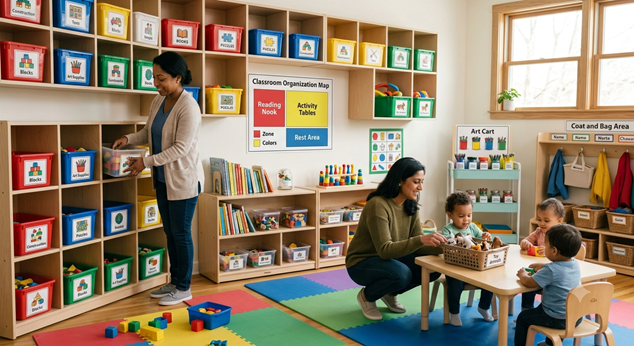
A well-organized classroom can make a big difference in a childcare setting. When toys, learning materials, books, and supplies have designated places, children know what to expect and childcare providers can spend less time searching for things and

How to Improve Parent Communication: A Caregiver’s Guide to Trust, Clarity, and Connection
Parent communication isn’t just about updates—it’s about building trust, easing worries, and creating a partnership that feels like family. For caregivers, mastering this skill can turn a good experience into an unforgettable one. Here’s how to make

Updating Childcare Policies Before the New School Year
As summer winds down and the new school year approaches, families across the US and Canada begin preparing for a season of change. For parents who rely on childcare providers — whether nannies, babysitters, or daycare centers — this is also the perfe